
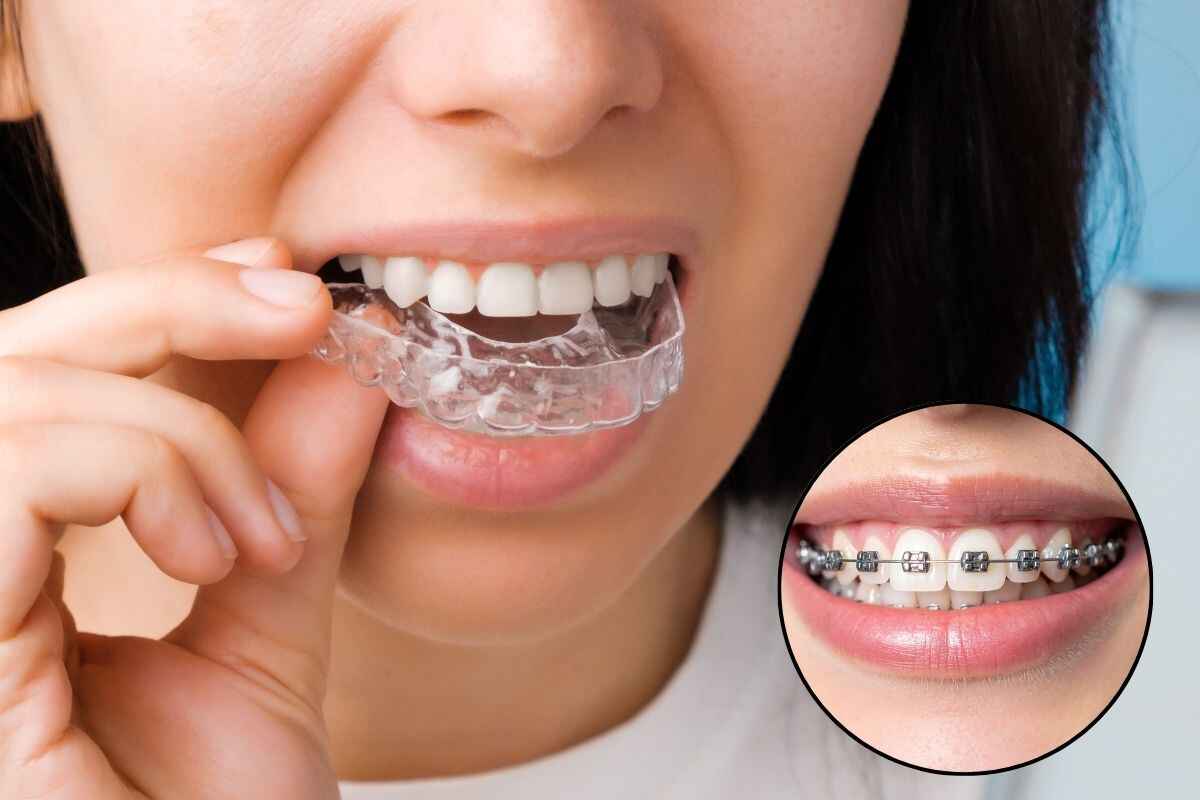
If you’re thinking about straightening your teeth, you have likely asked the same question we hear every week: Should I choose braces or clear aligners?
Both options can straighten teeth, fix bite issues, and improve your smile. But they work differently, feel different, and fit into daily life in different ways. The right choice depends on your goals, your lifestyle, and how complex your orthodontic needs are.
How Traditional Braces Work
Traditional braces use metal brackets and wires to gently guide your teeth into proper alignment over time. We attach brackets to each tooth and adjust the wire during scheduled visits. That steady pressure moves teeth in small, controlled steps.
Braces can correct:
- Crowded teeth
- Gaps between teeth
- Overbite and underbite
- Crossbite
- Rotated or severely misaligned teeth
- Complex orthodontic cases
Because braces stay on your teeth 24/7, they work consistently. You don’t have to remember to put them back in. For many patients — especially teens or those with more involved alignment issues — that reliability makes a big difference.
What to Expect With Braces
- Mild soreness after adjustments
- Some food restrictions (sticky, hard, chewy foods)
- Careful brushing and flossing around brackets
- Average treatment time: 18–24 months, depending on complexity
Braces may not be flashy, but they get the job done — and they’ve been doing it successfully for decades.
How Clear Aligners Work
Clear aligners use a series of custom-made, removable trays that gradually shift your teeth. You wear each set for about one to two weeks before moving to the next.
People often search for clear aligners vs traditional braces because they want something more discreet. Aligners are nearly invisible, and you can remove them when eating or brushing.
Clear aligners can treat:
- Mild to moderate crowding
- Small gaps
- Minor bite issues
- Relapse after previous braces
What to Expect With Clear Aligners
- You must wear them 20–22 hours a day
- You remove them to eat and drink (except water)
- Oral hygiene is easier since you brush normally
- Average treatment time: 6–18 months for mild to moderate cases
Aligners require discipline. If you leave them out too long, treatment slows down. The trays only work when they’re in your mouth.
Braces vs. Clear Aligners: Effectiveness
One of the most common questions we hear is: Are clear aligners as effective as braces?
The honest answer? It depends on the case.
Braces often work better for:
- Severe crowding
- Large bite corrections
- Significant tooth rotations
- Complex jaw alignment issues
Clear aligners work very well for:
- Mild to moderate spacing or crowding
- Adults who had braces before and experienced shifting
- Patients who want a more subtle appearance
If your orthodontic needs are more advanced, braces may offer more control. If your case is straightforward, aligners can produce excellent results.
Comfort and Daily Life
When comparing braces vs clear aligners for adults or teens, comfort matters.
Braces may cause:
- Irritation to cheeks and lips at first
- Temporary soreness after adjustments
Clear aligners may cause:
- Mild pressure when switching trays
- Slight lisp during the first few days
Aligners usually feel smoother because there are no brackets or wires. However, some patients prefer braces because they don’t have to think about compliance. Once braces are on, they’re working.
Appearance and Confidence
If appearance weighs heavily in your decision, clear aligners offer an advantage. They are nearly invisible in social and professional settings.
That said, many teens choose braces without hesitation. Today’s braces are smaller and less noticeable than they used to be. For some folks, the visibility simply isn’t a concern.
The right choice depends on how important discretion feels in your day-to-day life.
Cost of Braces vs. Clear Aligners
Another frequent search we see is: What is the cost difference between braces and clear aligners?
Costs vary depending on case complexity and treatment length. In many situations, the price difference is smaller than people expect.
Factors that affect cost:
- Length of treatment
- Severity of alignment issues
- Type of materials used
- Insurance coverage
It’s best to look at the full picture rather than assuming one option is always more expensive. What matters most is choosing the treatment that will truly fix the issue.
Treatment Time: Which Is Faster?
Patients often ask, How long do braces take compared to clear aligners?
For mild cases, clear aligners may work faster. For complex cases, braces may complete treatment more efficiently because they allow for stronger, continuous force.
Average timelines:
- Mild alignment issues: 6–12 months (often aligners)
- Moderate cases: 12–18 months
- Complex bite correction: 18–24 months (often braces)
Keep in mind, treatment speed depends on following instructions — especially with aligners.
Maintenance and Responsibility
With braces, you’ll need to:
- Avoid certain foods
- Use special flossing tools
- Keep regular adjustment visits
With aligners, you’ll need to:
- Wear them consistently
- Clean trays daily
- Keep track of your sets
- Avoid losing them
If you’re disciplined and prefer flexibility, aligners can work beautifully. If you’d rather not worry about removing trays or tracking wear time, braces may be simpler.
Finding the Right Fit for Your Smile in Texas? We Are Here
If you’re weighing braces vs. clear aligners and want clear, straightforward guidance, we’re here to help.
At BLVD Dentistry & Orthodontics, we care for patients across Houston, Austin, and Fort Worth (Hulen). Our team takes the time to evaluate your bite, explain your options clearly, and recommend the orthodontic treatment that truly fits your needs and lifestyle.
Whether you’re exploring clear aligners in Cypress, Spring, Heights, Galleria, considering braces in Austin near 5th street or Riverside , or looking for an experienced orthodontic provider in Fort Worth, we’re here to walk you through it step by step.
Find our location near you to schedule your visit and let us find the right solution for your smile right here in Texas.