
Losing a tooth can affect more than the appearance of your smile. Depending on its location, a missing tooth may make chewing less comfortable, change how your teeth fit together, or leave you wondering which replacement option is right for you.
Dental implants are one option for replacing missing teeth. They are designed to support a replacement tooth and help restore function and appearance. However, implants are not the only solution, and they are not suitable for every patient.
If you are considering tooth replacement, learning how implants work, what treatment involves, and which factors affect candidacy can help you prepare for a conversation with your dentist.
What Are Dental Implants?
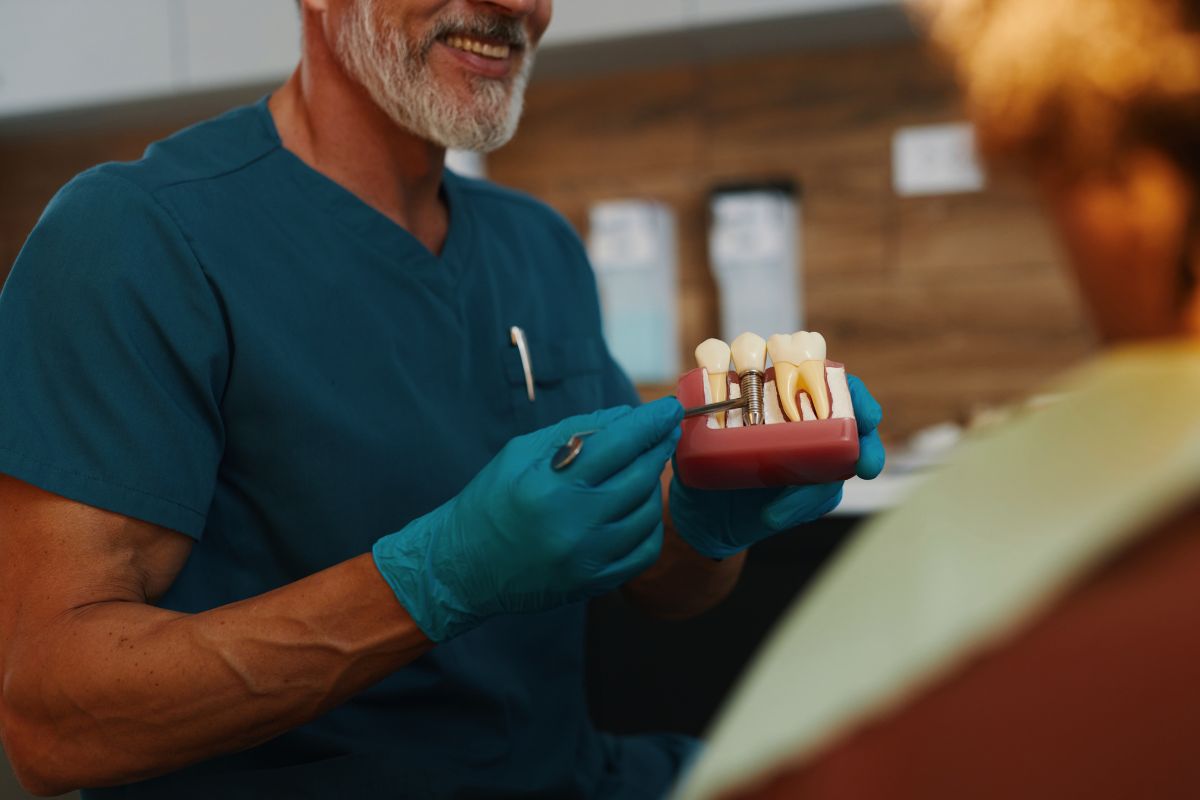
A dental implant is a small post, commonly made from titanium or another biocompatible material, that is placed in the jawbone to serve as an artificial tooth root. After healing, the implant can support a replacement tooth or other dental restoration.
A typical implant restoration has three main components:
- Implant post: The part placed in the jawbone.
- Abutment: A connector that attaches the replacement tooth to the implant.
- Crown or restoration: The visible portion designed to replace the missing tooth.
The exact design depends on how many teeth are missing, the location of the gap, and the patient’s treatment plan. A single implant may support one replacement tooth, while multiple implants can sometimes support a larger restoration.
Unlike a traditional dental bridge, an implant does not generally rely on neighboring teeth for support. Whether that difference makes implants the preferred option depends on your oral health, anatomy, preferences, and budget.
Why Should You Consider Replacing a Missing Tooth?
A missing tooth may affect your ability to chew comfortably, especially if it is located in an area that does much of the work during meals. Some people also feel self-conscious about a visible gap when speaking or smiling.
Over time, nearby teeth may shift toward an open space. The way your upper and lower teeth meet can also change. When a tooth is lost, the surrounding jawbone may gradually lose volume because it no longer receives the same stimulation from that tooth’s root.
These changes do not occur at the same rate for everyone. The effects depend on factors such as the tooth involved, the condition of surrounding teeth, and your overall oral health.
Replacing a missing tooth may help restore chewing function and fill the gap. Your dentist can explain whether an implant, bridge, partial denture, or another approach is appropriate for your circumstances.
Who May Be a Candidate for Dental Implants?
Dental implant treatment begins with an evaluation. Being interested in implants does not automatically mean they are the best choice, and certain factors can affect whether treatment can proceed safely.
Your dentist may evaluate:
Jawbone volume: The implant needs adequate bone support. If bone volume is limited, additional procedures may sometimes be considered.
Gum health: Active gum disease may need to be treated before implant placement. Healthy gums are important for maintaining the tissues around the restoration.
Overall health: Certain medical conditions, medications, and healing-related factors may influence treatment planning. Share your complete medical history with your dental team.
Oral hygiene: Long-term implant maintenance requires regular brushing, cleaning between teeth, and professional dental care.
Smoking and tobacco use: Tobacco use can affect healing and increase the risk of complications. Your dentist can discuss how it may influence your treatment.
Age alone does not determine candidacy. The condition of the jawbone, stage of dental development, medical history, and other clinical factors matter.
A consultation helps determine whether implants are suitable and whether any preparation is needed before treatment.
What Happens During Implant Treatment?
The process varies from patient to patient, but it usually involves several stages.
1. Examination and Planning
The dentist reviews your dental and medical history, examines your mouth, and assesses the missing tooth area. Imaging may be used to evaluate bone structure and plan implant placement.
This is also the time to discuss your goals, possible alternatives, estimated treatment stages, and expected costs. Ask how long treatment may take and whether you will need any additional procedures.
2. Preparing the Mouth, If Needed
Some patients need treatment for gum disease, removal of a damaged tooth, or a bone graft before an implant can be placed. Others may be ready to proceed with implant surgery.
The need for additional procedures depends on the condition of the site and the treatment plan.
3. Implant Placement
During implant surgery, the implant post is placed in the jawbone. The procedure and comfort measures depend on the clinical situation and the dentist’s approach.
After placement, the implant generally needs time to heal and integrate with the surrounding bone. This process is often called osseointegration.
4. Attaching the Replacement Tooth
Once healing and stability are adequate, the dentist can attach the abutment and final crown or restoration. In some cases, a temporary tooth may be used during part of the process.
Your dentist will explain how to care for the area during healing and when you can return to normal eating habits.
Dental Implants vs. a Dental Bridge
An implant and a dental bridge can both replace a missing tooth, but they work differently.
A dental implant is supported by a post in the jawbone. A conventional bridge typically fills the gap by using neighboring teeth as supports. The condition of those neighboring teeth, the available bone, treatment time, and cost can all influence the recommendation.
Implants often require surgery and a longer treatment timeline because healing is part of the process. A bridge may be completed on a different schedule, but it may require reshaping supporting teeth.
Neither option is automatically best for everyone. Your dentist can explain the advantages, limitations, maintenance requirements, and long-term considerations of each choice.
How Can You Care for Dental Implants?
Dental implants still need consistent care. Although the replacement tooth itself cannot develop a cavity, the gums and bone around the implant can develop problems if plaque accumulates or inflammation goes untreated.
To support your restoration:
- Brush twice daily with a soft-bristled toothbrush.
- Clean between your teeth and around the implant as directed.
- Attend recommended dental checkups and professional cleanings.
- Avoid using your teeth to open packages or bite hard objects.
- Contact your dentist if you notice persistent soreness, swelling, bleeding, or movement in the restoration.
Your dental team can show you suitable cleaning tools and explain how to maintain the implant based on its location and design.
What Should You Ask Before Starting Treatment?
Before committing to treatment, ask your dentist:
- Am I a suitable candidate for an implant?
- Are there other tooth replacement options I should consider?
- Will I need a bone graft or another preparatory procedure?
- How long might the complete process take?
- What costs should I expect, including follow-up care and the final restoration?
- How will I clean and maintain the implant after treatment?
Clear answers can help you understand the process and compare options. You should have enough information to make a decision that fits your oral health needs, priorities, and circumstances.
If you are exploring tooth replacement, learn more about dental implants at BLVD Dentistry & Orthodontics Austin 5th Street or visit our Austin Riverside location to learn more about the practice and appointment options.
Frequently Asked Questions
Are dental implants permanent?
Implants are designed as a long-term tooth replacement, but they are not guaranteed to last a lifetime. Their longevity depends on factors such as oral hygiene, gum health, overall health, and regular professional care.
Is implant treatment painful?
Some discomfort and swelling can occur after implant placement. Your dental team will explain the available comfort measures and aftercare instructions based on your procedure and individual needs.
How long does the dental implant process take?
The timeline varies. Some patients need additional treatment or more healing time before receiving the final restoration. Your dentist can provide an estimate after examining the implant site.
Can I get an implant if I have bone loss?
Possibly. The amount and location of bone loss affect treatment planning. Some patients may be candidates for bone grafting or other approaches, while others may need to consider alternative restorations.
How do I choose between an implant and a bridge?
Your dentist can compare both options based on your bone and gum health, the condition of neighboring teeth, treatment timeline, maintenance needs, and cost. An examination is necessary to determine which option is appropriate for you.
