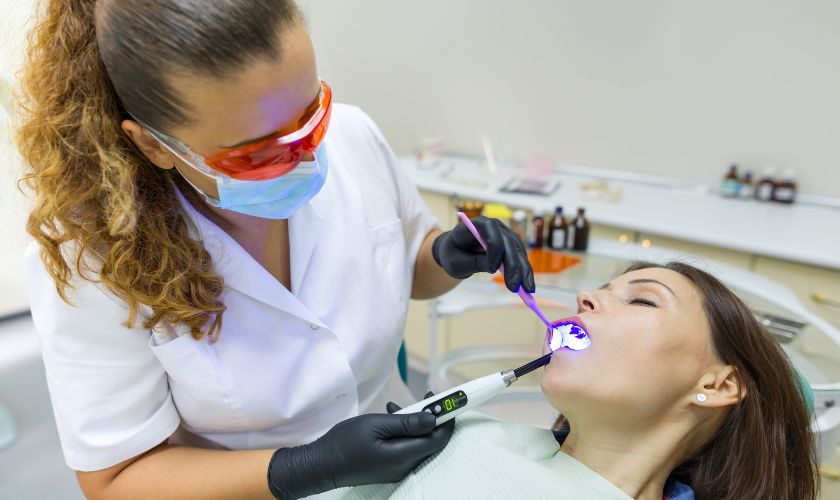
Does the thought of a dental appointment send shivers down your spine? You’re not alone. Millions of people experience dental anxiety, fearing pain and discomfort during procedures. Thankfully, modern dentistry offers a solution: sedation dentistry.
We’ll delve into the different types available, explore the benefits they offer, and answer the all-important question: will you feel pain? We’ll also help you determine if sedation dentistry is the right choice for you and what to expect after your procedure. So, take a deep breath, relax, and get ready to discover a path to comfortable and anxiety-free dental visits!
A one-stop guide to understanding dental sedation
Does Dental Sedation Hurt?
This is the most direct and common question people have about sedation dentistry. The answer is no; you should not feel pain while under sedation. Sedation dentistry uses medication to help you relax and feel comfortable during your dental procedure. You may need to remember the procedure afterward.
In addition to sedation, your dentist will also use a local anesthetic to numb the area being treated. This ensures that you won’t feel any pain even if the sedation wears off a bit.
Types of Dental Sedation
There are three main types of dental sedation:
- Minimal sedation (laughing gas): This is the lightest form of sedation, and it involves inhaling nitrous oxide (laughing gas) through a mask. You will be awake and responsive, but you will feel relaxed and happy.
- Moderate sedation (oral sedation): This type of sedation is given in pill form. It will make you feel tired and relaxed, but you will still be awake and able to respond to questions.
- Deep sedation (IV sedation): This is the strongest form of sedation, and it is administered through an IV. You will be very tired and may need to remember the procedure afterward.
Benefits of Dental Sedation
There are many benefits to dental sedation, including:
- Reduced anxiety and fear
- Increased comfort during the procedure
- Less gagging reflex
- Ability to complete longer or more complex procedures
- Amnesia (not remembering the procedure)
Who is a Candidate for Dental Sedation?
Dental sedation is a safe and effective option for many people, including those who:
- Have dental anxiety or fear
- Have a strong gag reflex
- Need to undergo a long or complex procedure
- Have difficulty getting numb with local anesthesia
What to Expect After Dental Sedation
After dental sedation, you will need to be monitored by a dentist or recovery staff member until the effects of the sedation wear off. You will also need to arrange for someone to drive you home.
You may feel drowsy and uncoordinated for the rest of the day. It is important to avoid driving, operating machinery, making important decisions, drinking alcohol, and engaging in strenuous activity.
Conclusion
Dental sedation is a safe and effective way to help you relax and feel comfortable during your dental procedure. If you are considering dental sedation, talk to your dentist about whether it is right for you.