
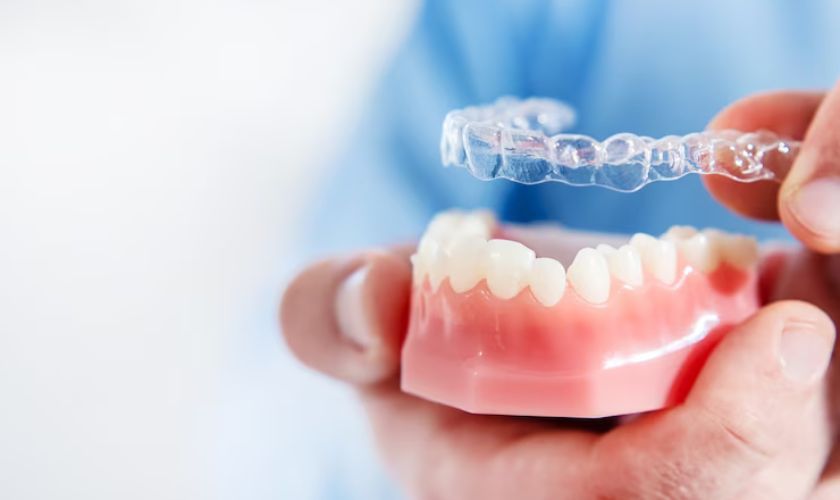
Achieving a straight and radiant smile is a universal desire, and advancements in orthodontics have provided various options. Among these, Invisalign and traditional braces stand out as popular choices. “Is Invisalign faster than braces?” is a frequently asked query. Let’s investigate the subtleties of these orthodontic treatments and try to solve this mystery.
Comprehending the Fundamentals:
You can give a brief introduction to Invisalign and traditional braces, explaining how they function to straighten teeth and correct misalignments.
Treatment Duration with Invisalign:
- Talk about the typical length of an Invisalign treatment, taking into account variables like patient compliance and the degree of misalignment.
- Emphasize the benefits of removable aligners and how they could shorten the course of therapy.
The Time-Tested Method for Braces:
- Analyze the standard braces timetable, paying particular attention to the mechanisms of adjustment.
- Talk about the situations in which braces might be advised for specific kinds of misalignments.
Elements Affecting Treatment Duration:
Examine the many variables that can impact the orthodontic treatment time, including patient age, follow-up appointment commitment, and case complexity.
Experience of the Patient: Convenience and Comfort:
Compare the experiences of wearing traditional braces and Invisalign aligners, taking into account factors like maintenance, dietary restrictions, and comfort.
Success Stories and Case Studies:
Provide a balanced viewpoint by sharing case studies or real-world examples that show timely and successful results with braces as well as Invisalign.
The Significance of Discussion:
Stress how important it is to speak with a dentist at BLVD Dentistry & Orthodontics to figure out the best course of action based on unique needs and objectives.
Conclusion:
The rate at which orthodontic treatment is completed is arbitrary and depends on a number of variables. Traditional braces have shown to be effective over time, even though Invisalign provides a more covert and flexible option. Personalized consultation and a deep comprehension of each patient’s particular circumstances are crucial.